

Therapeutic Exercises
Our culture is taught to address symptoms, so that's what initially brings most people to the chiropractor or any other health care provider. However, what our culture isn’t taught is that there is a huge difference between the cause of the symptom and the symptom itself. Advil and Jack Daniels may work, but they are a terrible long term solution for pain. (Studies show that chronic NSAID (ibprofen…etc) use results in more inflammation, pain, joint damage and joint replacement as well as a negative impact on other body structures.)
While our initial goal for a client in pain is to reduce inflammation, improve joint mobility and provide pain relief, that is not where our care stops. Because health is freedom, our goal is to help you make LASTING improvements to your health and body function so that you have lasting relief from pain. So, if you have a condition that has been happening over and over again and you want it to stop reoccuring, you will need to address the causes that continue to stress the joints that are hurting. This most always means that some functional and/or postural exercise prescription will be part of the process. There are many components that create chronic conditions, a major one is having muscles that are either too tight, too weak or both.
Muscular imbalance caused from trauma, movement deficiency, postural distortion or overuse causes muscles and tendons to either be too tight or too weak and is often a driving force in chronic pain and injury. This is why addressing muscular imbalances is a crucial component to any rehab program that wants results that last.
Muscle imbalance is a term used when there is a clear discrepancy between the tension and/or strength displayed between two opposing muscle groups typically front to back (ie hip flexors and hamstrings) These discrepancies typically come with a loss to normal range of motion. There are two majors that fit into this category named upper cross and lower cross syndrome, but imbalance can happen anywhere. These imbalances are often contributed to by our daily posture and have muscular components that become tight and shortened or weak and elongated. (Posture is important because it isn’t possible to relax your trapezius muscle (between shoulders and neck) and then simultaneously ask it to hold up your head in a tech neck posture out in front of your body for 6-8 hours a day!)
In our office we provide therapeutic exercise consultations that are targeted specifically to your imbalances based on your examination as part of your care plan. A typical case has between 2-5 of these sessions where the patient learns between 1-3 exercises. Therapeutic and postural exercises typically can take 1-3 months to start making a real difference in the health of an injured tissue. Because form is so important to the restoration of function, we then provide as many updates as needed at no charge until we are confident that the exercises are being performed properly. Since we keep the amount of exercises low to only the most impactful, most patients can learn proper form within 2-3 updates, so after that we additionally provide accountability to help the patient to continue to perform them to the point where they make lasting changes to their function. With our program even hard changers see change, core strength really does improve and hamstrings really do get longer!!
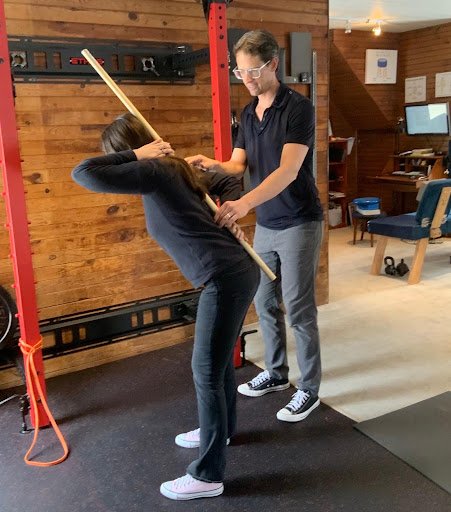
Functional Exercise - Hip Hinge / Hamstring Stretch
Teaching a patient to move from their hip joints instead of the lower back. For many lower back pain and sciatic patients, this exercise helps provide relief by lengthening the hamstrings which reduces the demand on the lower back discs.